
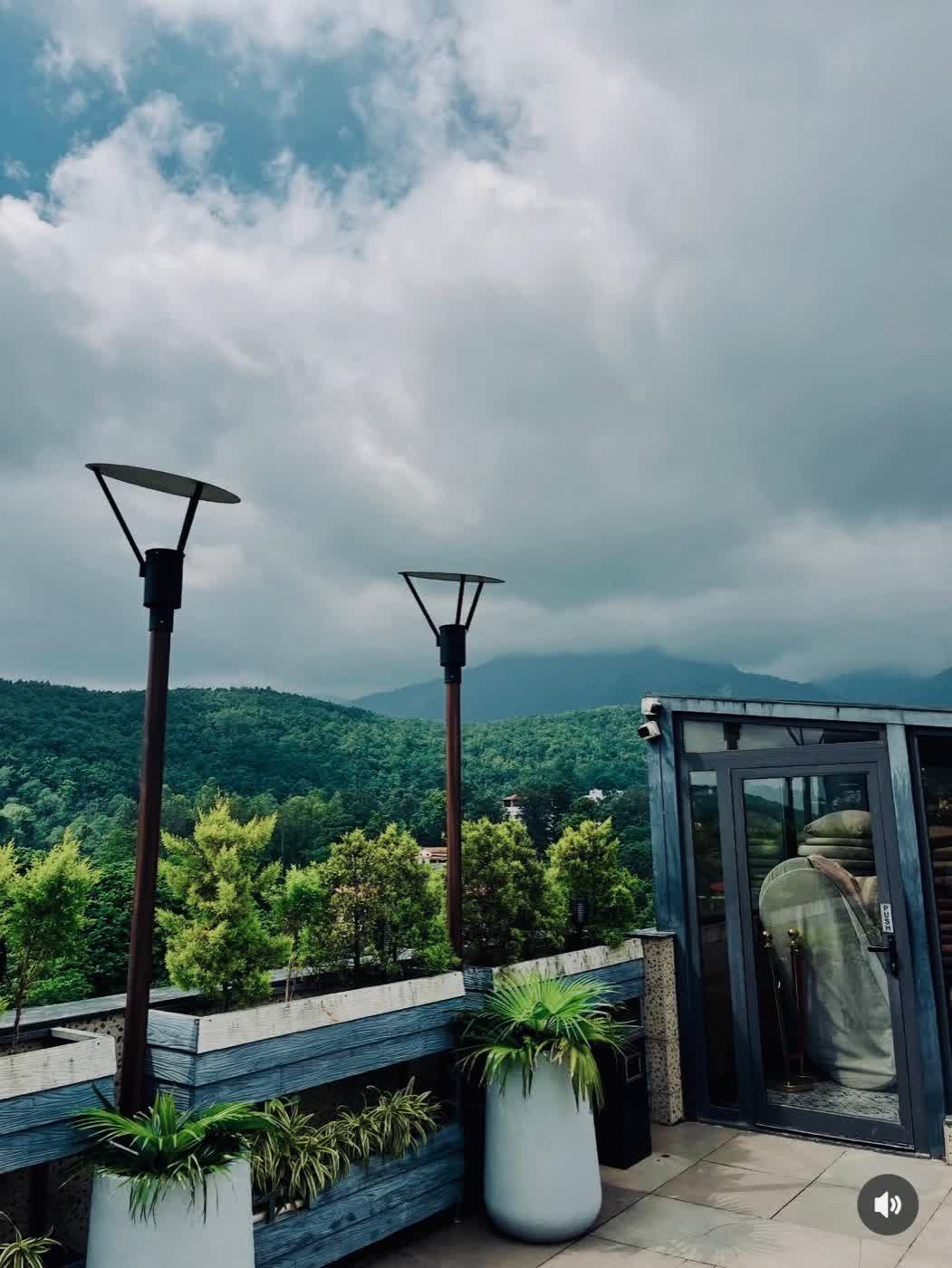
Planning a food day in Dehradun is different from planning one in Delhi or Bombay. The city is small enough to cover in a single day on foot and by cab, the altitude means you're never uncomfortably hot, and the food culture runs from six in the morning to midnight without a gap. What it requires is a loose sequence, you can't eat well here by restaurant-hopping on impulse, and some knowledge of what disappears early.
This is the order we'd eat the city. If you're trying to decide on one restaurant for tonight rather than plan a full day, see our best restaurants in Dehradun guide instead.
Morning: Paltan Bazaar and Doon chai culture
Dehradun's morning food life is centred on Paltan Bazaar and it starts before 8 AM. The landmark dish is bun-tikki, a soft, slightly sweet bread bun split open, slathered with butter and chilli-tomato chutney, then packed with a hot aloo tikki. It is cheap, it is messy, it is exactly right at seven in the morning before the city wakes up. The best carts cluster at the western end of the bazaar, opposite the old clock tower. Get there before 9 AM; after that the LBSNAA cadets arrive and the queue is no longer relaxing.
Eat standing. Wash it down with tea from the adjacent stall, the chai here is milky and oversweet in the hill-town style, which is the only style worth having at this hour. Don't ask for a receipt. Don't ask for a table. This is the Doon breakfast and it hasn't changed in forty years.
Paltan Bazaar also has a quietly excellent mithai tradition. Kumar Sweet Shop carries bal mithai, the walnut-fudge sweet from Kumaon, and singori wrapped in maalu leaf. If you have a sweet tooth before noon, now is the moment. By evening, the fresh stock is gone.
Late morning: momo culture and the Landour detour
Dehradun sits at the base of a momo corridor that runs from the city's Tibetan communities all the way up to Mussoorie and Landour. The city's own momo culture is unpretentious, small tiffin-style stalls in the Rajpur Road lanes, steamed dumplings with a dark chilli-garlic dip, eaten fast and often. The fillings are straightforward: vegetable, chicken, paneer. The best ones are in the lanes off the main road, unremarkable from the outside.
If you have time and a car, the 45-minute drive up Rajpur Road to Mussoorie unlocks the best momos in the wider region: Char Dukan at the top of Landour, four shops perched at 2,100 metres with a view down the valley. Order steamed, not fried. Get the cheese momo if it's on. Have one round of the dip before you over-commit to plain. Drive back to Dehradun by 12:30 PM.
Afternoon: the Garhwali table
Lunch is where Dehradun reveals its identity most clearly. The food of the Garhwal hills, mandua roti (finger-millet flatbread), gahat dal (horse-gram lentils, slow-cooked till thick), kafuli (spinach-and-paneer curry), bhang ki chutney made from hemp seeds, is what the families here have eaten for generations. It is not glamorous food. It is nourishing, mineral, built for altitude and cold mornings.
The unmarked Garhwali thali joints on the older stretch of Rajpur Road serve this lunch and only this lunch, from around 12:30 PM until 3 PM, after which the pots are empty. There is no menu, no takeaway, and often no English. Sit down, eat what they bring, pay what they charge. It is the most Dehradun lunch you will have.
After lunch, the city naps. Seriously. Restaurants close, shops half-shutter, the street quietens. Follow the example. Or walk slowly up Rajpur Road past the old colonial trees and find Ellora's Bakery, the 1953-founded institution on Rajpur Road near Astley Hall, for a black-forest pastry and a filter coffee in the afternoon cool.
Golden hour: Rajpur Road dining mile and the Farzi rooftop sundowner
The stretch of Rajpur Road from Chukkuwala to Jakhan is where Dehradun's evening dining is concentrated. From around 5 PM it wakes up, café lights go on, restaurant boards get chalked, the traffic slows to a crawl of families on their evening outings. This is Dehradun doing what hill towns do best: making an event out of sundown.
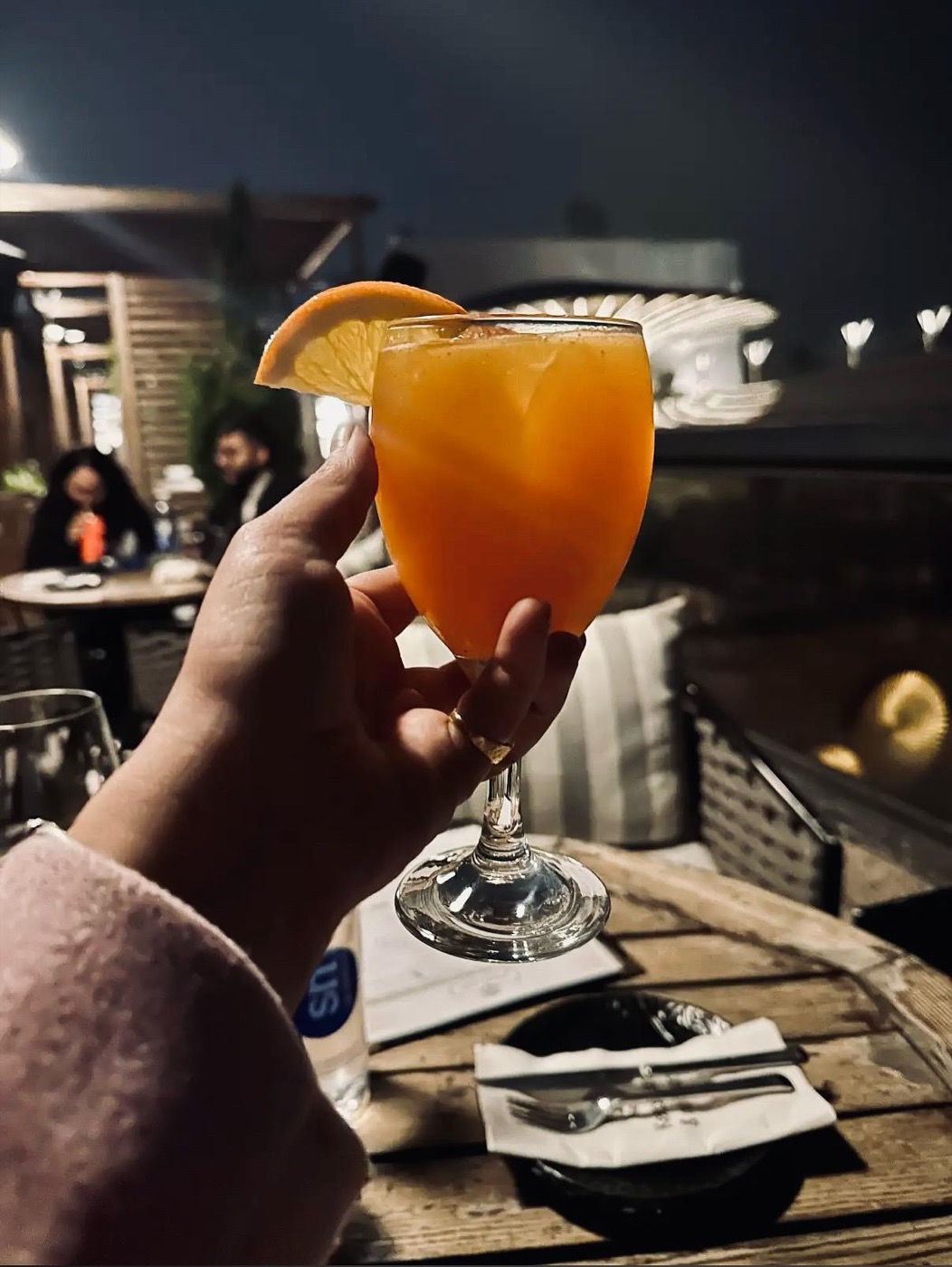
Our recommendation is to be at Farzi Café Dehradun, 222 Dhakpatti, Rajpur Road, by 6 PM in summer, 5 PM in winter. In summer the sun drops behind the Mussoorie hills around 6:50 PM; in winter it goes earlier, around 5:30 PM. Arrive 45–50 minutes before sunset, order a Saffron Sour or a Mussoorie Hill Highball, and take an open terrace table facing west. The valley goes golden, then the hills go violet, then the lights in Mussoorie come on one by one thirty kilometres away. It takes about 25 minutes and you don't want to miss a minute of it.
During the monsoon months (roughly July through September), the open terrace gives way to the glass-walled indoor bistro, the rain is too good to ignore but too committed to sit under. The restaurant operates year-round; the view from behind the floor-to-ceiling glass on a rain-heavy evening is its own kind of spectacular.
Dinner: the rooftop table
Don't move after the sundowner. The kitchen at Farzi Café Dehradun serves till 23:30 every night, and the dinner menu is the restaurant's full argument for itself. Begin with the Galouti on a Stone, a seekh-style mince patty served on a heated river stone with mint chutney, and the Dal Chawal Arancini, the most-photographed small plate in Dehradun. Move to the Lal Maas Risotto (Rajasthani red-lamb curry folded into Arborio) for the table. If you have one more order in you, the Awadhi Lamb Dum Biryani is the right choice. Close with the Mishti Doi Tres Leches, Bengali sweetened curd in a South American format, which sounds wrong and tastes exactly right.
Dinner for two runs ₹1,300–2,000. On Fridays and Saturdays the kitchen and bar stay open until 00:30, which makes Farzi the city's most useful late-night option for anyone who eats dinner at a civilised hour and still wants a nightcap at the bar.
Late night: the Sahranpur Chowk carts
If the evening has been long and the appetite has somehow held on, the food carts at Sahranpur Chowk run from roughly 10 PM onward. They serve one thing: Doon-style chow mein, thin noodles, more vinegar than you'd expect, an extra splash of soy, a fistful of julienned vegetables. It costs ₹80. It comes in a paper bowl. It has been the closing chapter of a thousand long Dehradun evenings and it will be the closing chapter of yours too.
Wear sneakers. Bring tissues. Come back next time and do the whole day again.